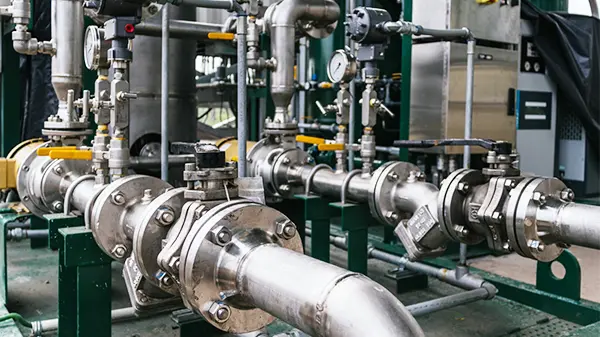


The functioning of the industrial world, even if we rarely think about it, depends on a basic yet crucial physical principle: the management of friction between moving surfaces. Without adequate protection, the gears of factories, ships, and large energy infrastructures would seize up in a matter of moments due to the heat generated by constant friction. Since ancient times, the main challenge for engineers has been to find effective methods to introduce separating fluids capable of extending the life of machinery. Today, technology has made great strides, and every modern production facility integrates a complex automated lubrication system to prevent breakdowns and reduce energy waste. For Sardinian and national industrial concerns that want to maintain high competitiveness, the quality of the design of these technical infrastructures is everything; in this area, Italian engineering excellence finds expression in the creation of Celyon oil and grease lubrication systems , a fundamental benchmark for optimizing workflows and protecting large investments in complex machinery.
Leonardo da Vinci's brilliant insights into friction
The history of these technologies has roots much deeper than one might imagine and intersects with the genius of Leonardo da Vinci. It was the Renaissance scientist who first systematically studied the laws of friction , dividing resistance into "sliding" and "rolling" and drawing the first prototypes of ball bearings in his famous codices. Leonardo understood that by introducing intermediate elements or grease between two surfaces, the force required to move a mechanism was drastically reduced. In the following centuries, with the advent of the Industrial Revolution and the birth of steam engines, these theoretical insights became an urgent practical necessity, pushing engineers to seek ever more stable oils that were resistant to high temperatures .