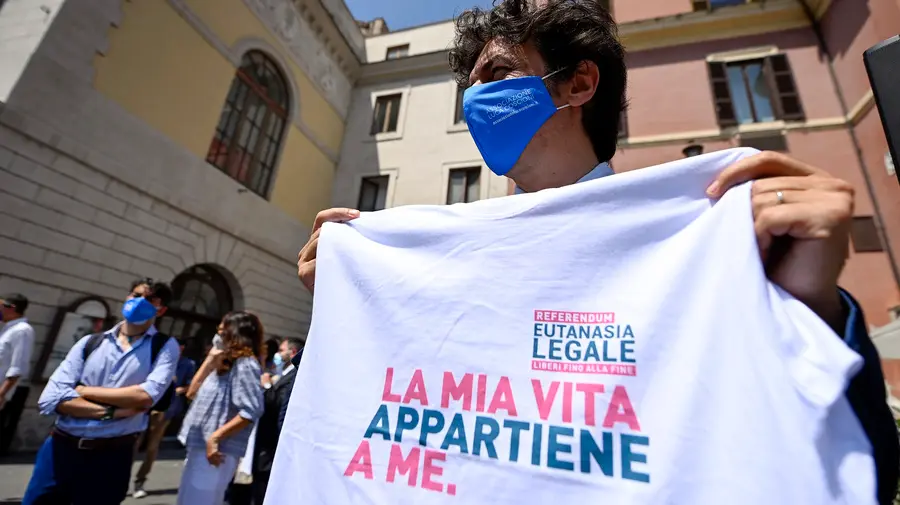


I always feel a certain discomfort when I find myself facing, on different levels of investigation, the issues inherent to the so-called "end of life": if only for the intimacy that accompanies the decision-making and motivational sphere of human intervention on a biological event a priori subtracted, when for religious conviction, when for mere accidentality, from the individual determination of each of us. Yet the question has arisen, and still arises, with the prevailing force of its solving duty: "to Caesar what belongs to Caesar, to God what belongs to God", one would be induced to exclaim, but not always the border is clear and / or universally acceptable.
If, then, Montecitorio, according to what has been learned from the most accredited press, has welcomed with good propensity the start of the works, however, the debate on the provision, previously mutilated through the introduction, in the Commission, of the "objection of conscience ”, failed to achieve any result due to the apparently occasional desertion of members of Parliament. I am not surprised: facing today, in full deterministic paralysis, such a delicate issue, would have entailed the subtraction of time to define the "unfortunate" reforms (considered in their outcomes) implemented by the Government of the Best (rectius: dei " Methuselah ") at the behest of the European Union. I would add, however, that the absence, however understood, is also a signal: of convenience, of opportunity, of small and superficial moralism. It is certainly not easy to indicate useful solutions to curb the decline of a Parliament since such solutions, unfortunately, should come from the same political forces that caused it. It is always the same story of the dog biting its tail: the less the dynamism is questioned the more it becomes gangrenous and stops working. A signal, however, of a markedly progressive nature, had to be given even just to ensure the survival of the original system of a party, the Democratic one, which strangely found itself floating, almost inert, on external political dynamics decided on different levels. intervention. But not deciding is always better, probably, than also deciding to make a mistake, albeit in the pursuit of a valuable understanding. Those who do not do not make mistakes: they say. And in the meantime the great social questions of our time remain unresolved, thus, in the general indifference.