

The Sardinian Crafts Fair runs until September 13th in Mogoro.
A sixty-fifth edition with a revolutionized exhibition path, thanks to the curatorial project "Intrecci"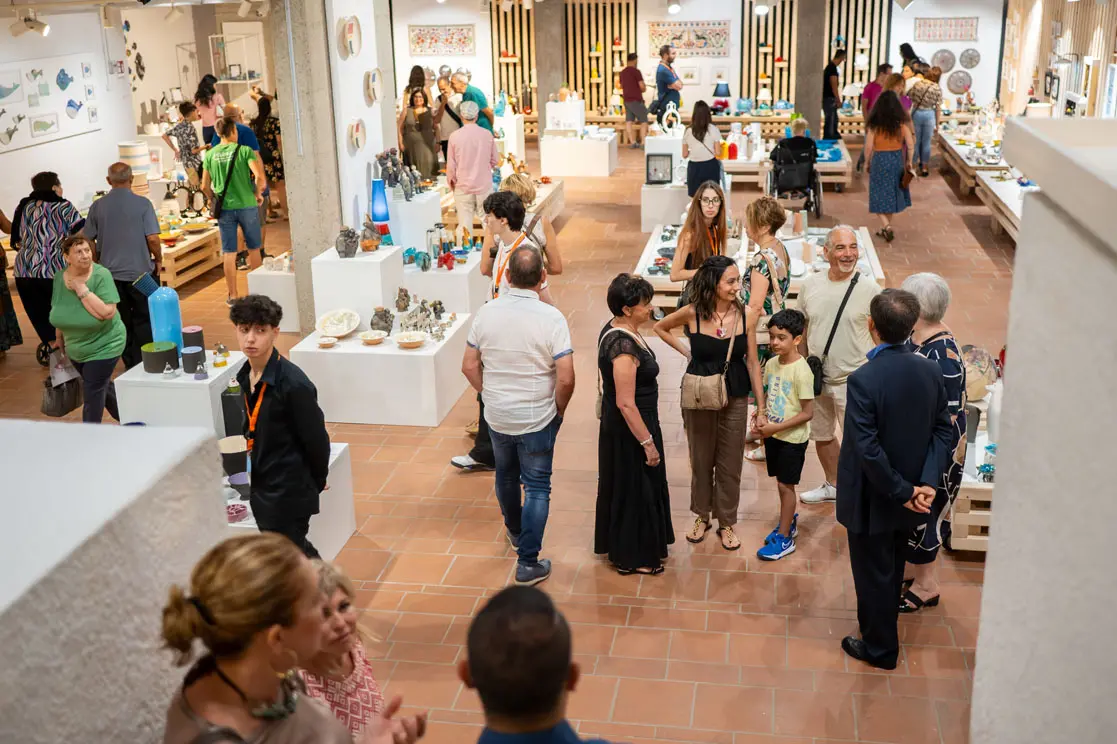
Per restare aggiornato entra nel nostro canale Whatsapp
Over six decades of intertwining the community's memory and future, in a new space rich in dialogue and cross-fertilization: the sixty-fifth edition of the Sardinian Artistic Crafts Fair has begun in Mogoro , which will liven up the center of Marmillo until September 13th and will be open daily from 10 am to 9 pm . The setting for the exhibition is the Carpet Fair in Piazza Martiri della Libertà , with the inauguration featuring the traditional ribbon-cutting ceremony entrusted to the former mayor – and key instigator of the initiative – Sandro Broccia , last Friday.
With an impressive number of one hundred and thirteen artisans hosted at the Fair, coming from all over the island and representing thirteen different fields of Sardinian artistic craftsmanship , the exhibition itinerary of the event revolves around the theme of " Interweaving ": ceramics and weaving, goldsmithing and leatherwork, cutlery and agri-food production, and also the arts of wood, glass, metals, embroidery, weaving, stone and fabrics as part of a collective dialogue in a single space , overcoming interdisciplinary barriers and building new relationships between the works, languages and materials present.
Not just a showcase, but an event created to promote manufacturing art and support the valuable work of local artisans . Over the years, it has become a meeting point between contemporary society and the island's cultural and material expression, enhancing a community heritage that is more alive than ever . "Intrecci" is certainly a reference to the textile art historically present in Mogoro, but above all, it is a metaphor for the relationships and sharing that have always made the Fair possible , within a collective identity that grows and evolves year after year.
Space is given to quality artisanal productions, but also to the creative processes and ancient knowledge that made them possible, inviting visitors to understand the gestures, techniques, and stories silently carved into each artifact on display. The artistic direction, curated by Violetta Scanu , began with the idea that each Fair is a layering of experiences , including reflections on the contemporary and the dialogue between the arts.
A vision presented in a direct and unified manner in the exhibition design , one of this year's major innovations: no longer the traditional division of spaces into production sectors, but a path built around the connections between the different artifacts, with innovative juxtapositions and hybrid areas to foster interdisciplinary dialogue , in the coexistence of design affinities, cross-fertilizations, mutual references, and discoveries in rapid succession for those present. This concept is also visually represented by the large central installation , suspended in the air thanks to woolen threads reinterpreted in a simple, contemporary language, recovering a material emblematic of the Fair's history and thus making it an architectural, spatial and identifying element, uniting people, works, and places .
Alongside the main exhibition, the event also features several important collaborations: among them, the Academy of Sardinian Music led by Simone Grussu , present at the Fair with a space dedicated to the island's traditional instruments; the exhibition of the historic tapestry curated by the Su Sticcau Folk Group; and the bookshop of the Mogorese Pro Loco , as well as many other local cultural organizations committed to promoting artisanal knowledge. Other collateral events on the program include the initiative by the Sinnai Weaving School dedicated to safeguarding the art of " su strexu e fenu "—part of the process initiated to recognize the Sinnai basket as a typical island product—and the " I Colori di Giulia " project, featuring works by the eponymous artist, a twenty-four-year-old on the autism spectrum, demonstrating the value of art as a tool for inclusion and recognition of neurodiversity .
With the support of the Municipality , the Region , the Fondazione di Sardegna , and the Parte Montis Union of Municipalities , the organizational coordination of the fair was entrusted to the social cooperative Mariposas de Sardinia , which then selected Scanu as artistic director and involved Sara Frau in the design and creation of the exhibition layout, Laura Frau and Roberta Orrù in operational coordination, and Silvia Vizilio in local promotion. Communications were handled by Fainas , through the work of Lara Melis , Ismaele Marongiu , and Roberto Pia .
