

Special plan against rats in Cagliari
The Metropolitan City's Insect Control Center launches operations in several areas of the capital.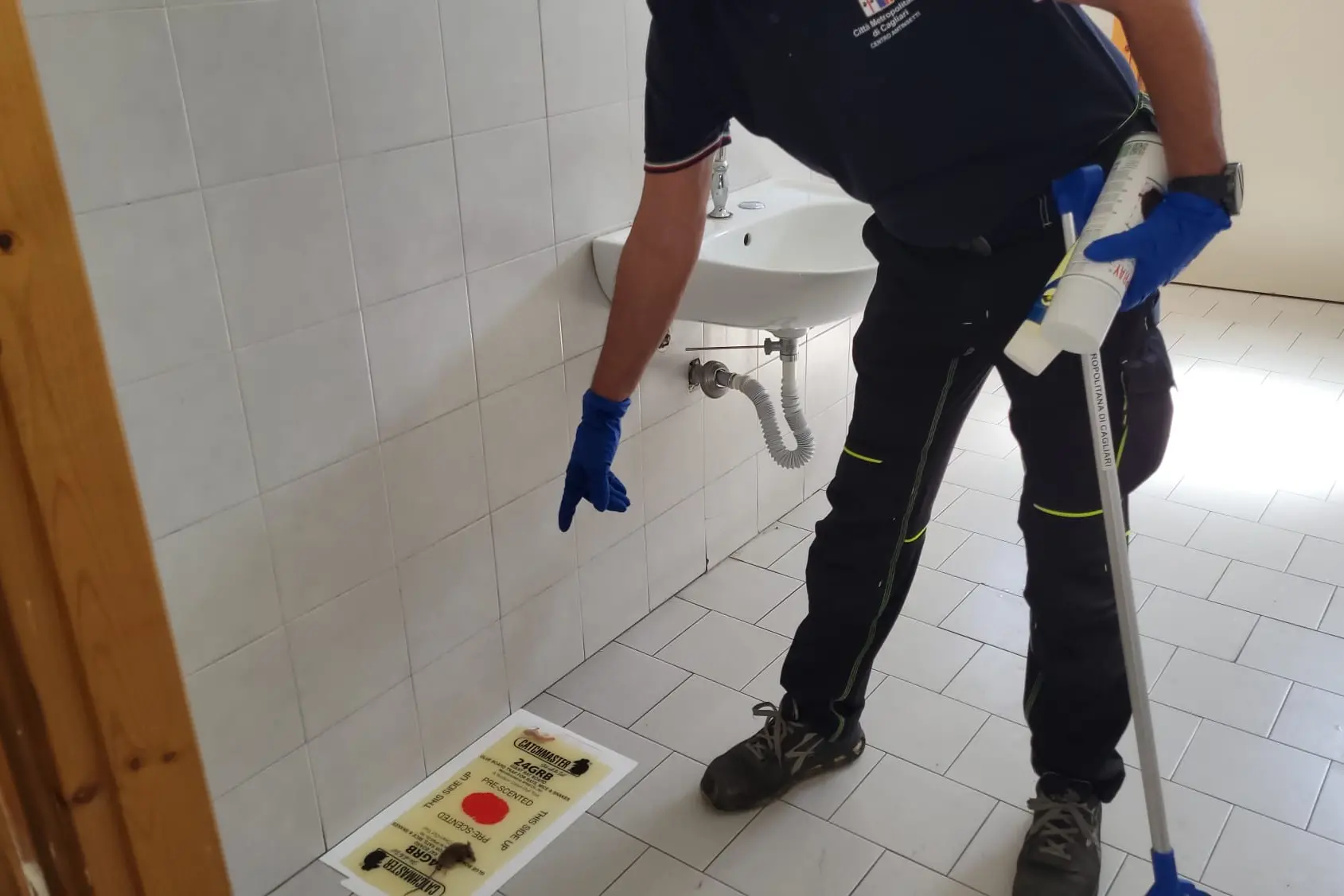
A rodent control operation
Per restare aggiornato entra nel nostro canale Whatsapp
A widespread, systematic intervention based on technical environmental control standards . The Metropolitan City of Cagliari has launched an enhanced rodent control and integrated pest management plan , intended to cover the entire urban area of the capital, with priority given to highly vulnerable and heavily frequented areas.
The action plan, coordinated by the Insect Control Center, involves the deployment of three specialized operational teams, expected to increase in the coming days thanks to a planned strengthening of the technical staff.
The anti-rodent offensive will affect several areas of the city: from Piazza Islanda to Via Cettigne, crossing the Quartiere del Sole, the historic center, up to the populous neighborhoods of San Michele and Is Mirrionis.
The intervention is not limited to the simple application of rodenticides, but adopts a protocol structured into four sequential operational phases : monitoring and preventive scouting; mapping of active outbreaks and surveying of biological traces (feces, sawdust, and walkways); identification of vectors and shelters; inspection of underground nodes, road drains, sewer manholes, utility rooms of public buildings, and overgrown shrubbery. Targeted treatment and exfoliation : controlled use of biocidal products in tamper-proof dispensers compliant with European regulations, positioned in areas inaccessible to non-target species. Follow-up and effectiveness evaluation: short-term checks to measure the reduction of the rat population and prevent recolonization.
A specific task force has already been sent to schools in the metropolitan area, with the aim of clearing courtyards, cafeterias, gyms, and surrounding areas in preparation for regular teaching activities.
"Our goal," says Luca Locci, head of Pest Control and the Insect Control Center for the Metropolitan City of Cagliari, "is to ensure maximum coverage, intervening promptly wherever critical indicators arise. However, chemical control alone is not enough: it is essential to address limiting environmental factors upstream, systematically eliminating food sources (food), water sources, and shelters that allow rodents to nest and proliferate."
(Unioneonline)