

Plastic crisis: storage begins in Macchiareddu, but the emergency isn't over.
The first extraordinary deliveries have begun. Regional Councilor Laconi urges the government: "Insularity exacerbates a national crisis; the ministry needs to take action."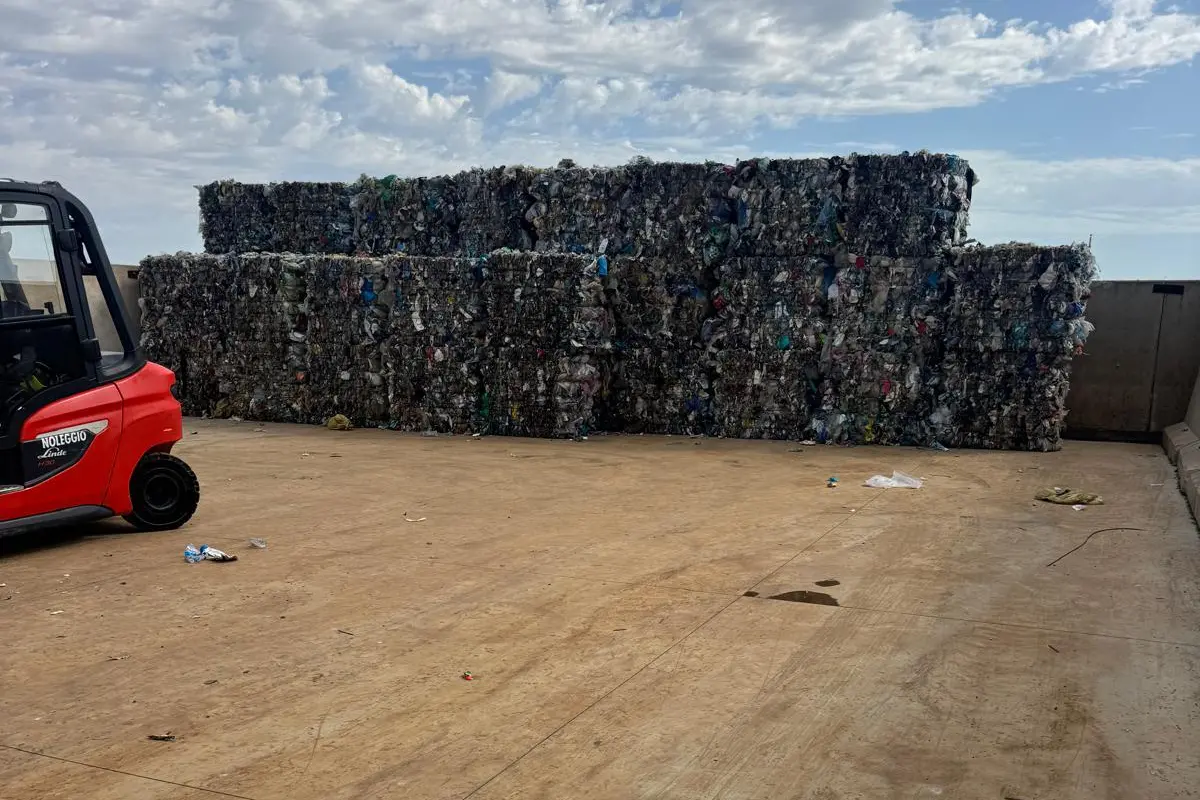
Per restare aggiornato entra nel nostro canale Whatsapp
The first plastic waste was unloaded this morning at 7:00 a.m. in the new temporary storage areas identified in Macchiareddu by Cacip and Tecnocasic . "So.Ma. Ricicla" has thus begun transferring the excess material to the newly identified and prepared spaces in an exceptionally short time. At the same time, the company has resumed receiving new quantities of plastic packaging from participating municipalities, according to a progressive and scheduled order. Therefore, the municipalities will not deliver directly to Tecnocasic, but will gradually resume delivery to "So.Ma. Ricicla" as the transfer of excess waste frees up operating capacity at the company's yard.
"The new capacity immediately available at Macchiareddu," the regional Department of the Environment announced, "is approximately 1,000 tons. At the same time, the authorization process has begun to make available an additional storage volume, estimated at several thousand tons, which is hoped to become operational in early September."
The opening of the new spaces, however, will not immediately lead to a normalization of service throughout Sardinia. Many municipalities continue to face difficulties managing the accumulated volumes, rescheduling schedules, and organizing flows. The resumption will necessarily be gradual, and the situation will continue to be monitored daily with managers and local authorities.
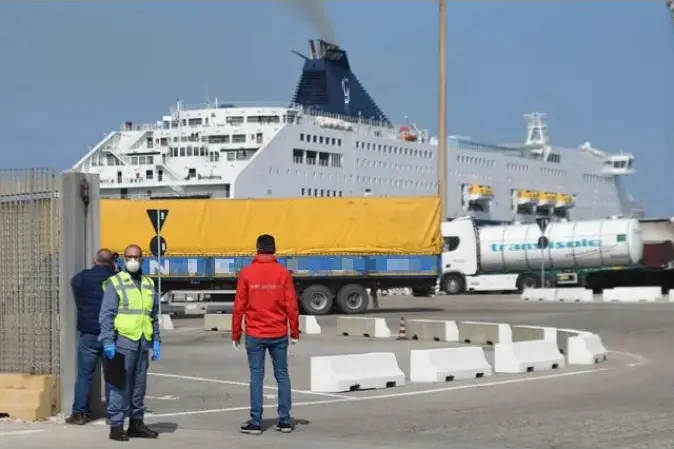
An initial positive sign concerns outgoing flows. Based on discussions with supply chain stakeholders, Corepla has arranged for materials to be allocated to sorting centers located on the mainland. This will allow approximately 600 tons of plastic packaging to be shipped out of Sardinia , freeing up a corresponding amount of storage capacity for regional suppliers.
This initial transfer is necessary, but not yet sufficient to guarantee the stability of the system. The actual lifespan of the new spaces at Macchiareddu cannot be calculated solely by considering incoming quantities: it will depend primarily on the regularity and consistency of outgoing flows , the scheduling of which falls under Corepla's responsibility. Without a continuous collection schedule, with volumes and destinations appropriate to the quantity of collected material, any forecast regarding the duration of available capacity would be technically unreliable.
"The Region," explains Environment Councilor Rosanna Laconi , "expresses its full gratitude to the mayors and ANCI Sardinia for their invaluable efforts, which, together with the industrial consortia, provinces, metropolitan cities, and regional offices, are contributing to addressing a particularly complex situation. This concrete collaboration involves managing services, informing citizens, coordinating with operators, and finding temporary solutions in the various regions. Our thanks to the mayors are not just a formality," adds Councilor Laconi, "they are on the front lines managing the consequences of a crisis they did not cause and cannot resolve alone. The Region shares the need for unified leadership and will continue to work with ANCI, provinces, metropolitan cities, and industrial consortia to ensure that every initiative is coordinated and supported by clear administrative, technical, and environmental conditions. Any local measures can only be residual and temporary and cannot result in the transfer of responsibilities resulting from a national dysfunction to mayors."
"The crisis didn't originate in Sardinia," adds Council member Todde. "For months, the national plastic packaging recycling sector has been affected by the contraction of the recycled materials market and the slowdown in flows to recovery facilities. On June 29, the leaders of CONAI and COREPLA confirmed to the Conference of the Regions that the critical issues affect the entire country. On the island, the problem first manifested itself in the north and then in the south, where the insufficiency of collections and the related vouchers issued by COREPLA has progressively saturated available space. Being an island further exacerbates the effects of the crisis : it limits the ability to quickly resort to alternative facilities, increases transportation times and costs, and makes it more difficult to transfer material to facilities located off the island.
The Region has repeatedly highlighted the gravity of the situation to the Ministry of the Environment and Energy Security, calling for national coordination , regularization of withdrawals, and measures to prevent municipalities and citizens from suffering the increased costs and consequences of the crisis. The new storage areas and the shipment of the first 600 tons to the continent allow for an operating margin to be restored, but they do not replace the intervention that is the responsibility of the Government and the consortium system.
" The emergency is not over ," Laconi concludes. "It will only be resolved when regular, continuous, and adequate outflows are restored. Until the government addresses the critical issues in the national supply chain and Corepla guarantees a reliable collection schedule, the problem will not only remain open, but it risks worsening. Sardinia is doing everything within its power, but it cannot be left alone to absorb the effects of a crisis that affects the entire country."