A solar eclipse is a special day in Sardinia today.
Observations from 7:30 p.m. Live from Sant'Antioco on Videolina's evening newscasts.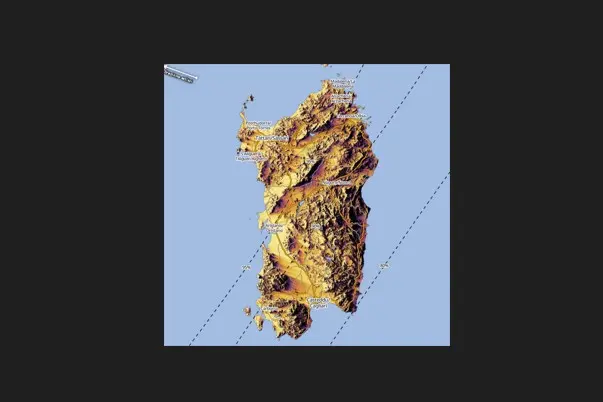
Per restare aggiornato entra nel nostro canale Whatsapp
The Universe will gift us a unique spectacle today: a partial eclipse of the Sun at sunset. Starting around 7:35 PM, the Moon's disk will slowly overlap the Sun, obscuring it by 75% to 95%, all while our star approaches the horizon . To fully see this eclipse, you'll need to be in a place where the west is clear of houses, hills, mountains, and anything else that might obscure the horizon. Around 8:25 PM, we'll see the Sun disappear almost completely, obscured by the Moon, thus admiring a unique and unforgettable sunset.
Scrolling through the pages of time, to find such a large partial solar eclipse, we must go back to August 11, 1999, when around 12:30 PM, the Sun in Sardinia was hidden by up to 80%. Solar eclipses have always captured the attention of man. Understanding and then predicting them has been a feat that has involved generations of skywatchers. In ancient China, it was believed that an enormous dragon swallowed the Sun and to see it reappear, the population would beat drums to chase away the Dragon and see the light again. Historically, we know that it was the Chaldeans, the people of ancient Mesopotamia, who understood solar eclipses and began to predict them with uncertainty. Meanwhile, the Greek philosopher Thales predicted the day of the solar eclipse in 585 BC, thus demonstrating his complete understanding of the phenomenon . Solar eclipses are a very rare phenomenon and affect a small portion of our planet. The Moon comes between us and the Sun, obscuring it, but the Moon and the Sun are very different celestial bodies. The Sun is a star, so large that its diameter is about 100 times that of the Earth. On the other hand, the Moon orbits us, is rocky, and its diameter is about a quarter that of the Earth.
Although the Moon is 400 times smaller than the Sun, it is 400 times closer to us than our star, and as it orbits, it can cause a solar eclipse twice a year. However, given the Moon's small size, the shadow it casts on Earth can reach a maximum of about 300 km, so the totality of an eclipse covers a small strip of land. The penumbra zone, which will affect Sardinia on the evening of August 12th, is much larger. Observing the Sun and the eclipse must be done with the utmost care and caution. Keeping your eyes focused on our star without adequate protection can cause serious damage to our retinas. Therefore, ordinary sunglasses, X-rays, or darkened windows should not be used for observation.
Eclipse observation will require special glasses or telescope solar filters. Welder's glasses can also work, but only with a strength higher than 12 DIN. Therefore, from Sardinia, we won't see the moment of totality of the eclipse, which will instead be visible in the Sardinian Sea, the Balearic Islands, and northern Spain. But this eclipse will still be a unique spectacle, because when the Sun is just touching the horizon, we'll be able to briefly remove our protective glasses and admire a unique sunset. On August 2, 2027, a high Sun will again be in partial eclipse, up to 90% here in Sardinia, but to admire a total eclipse across most of the island, we'll have to wait until July 6, 2187.