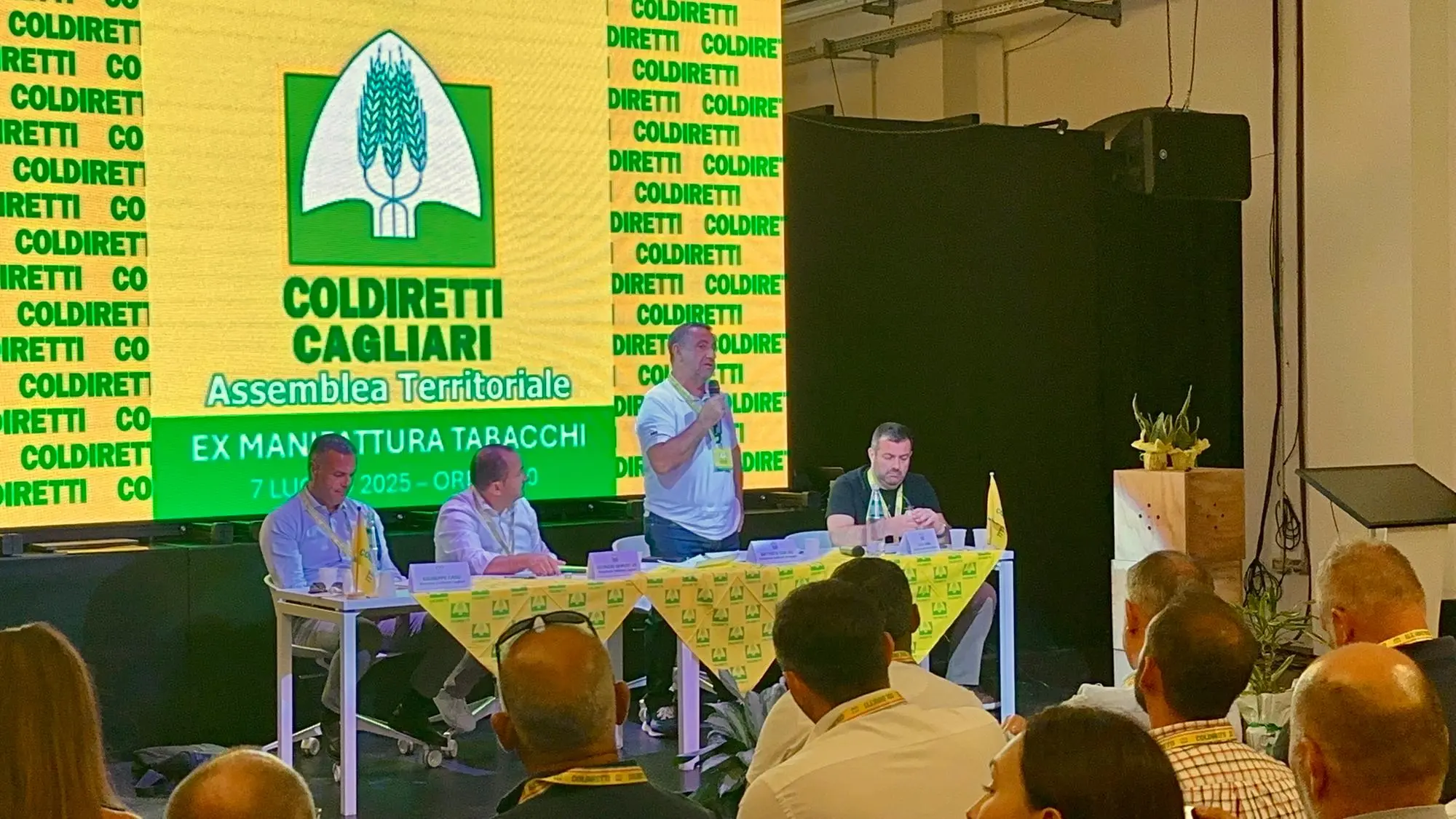


"We need a structural plan or we won't move forward. We need Sardinia and Italy to mobilize in the big battles or food production itself is at risk" . This was reiterated from Cagliari by the leaders of Coldiretti, gathered in Cagliari for the assembly of the Cagliari Federation with managers, farmers, mayors and regional councilors. The meeting is part of the mobilization process started by Coldiretti throughout Sardinia, with the aim of bringing the real priorities of the agricultural world to the table of regional politics, starting from the most immediate emergencies up to the structural reforms, postponed for too long.
The sectors – Cereal cultivation in difficulty, slow payments in agriculture, companies suffering from drought and lack of infrastructure, increasing damage from wild fauna . But – we read in a press release, «also the heavy repercussions on the future that come from Europe with the serious risks that the world of national and Sardinian agriculture is experiencing with the policies in place at EU level on which Coldiretti has already announced a battle».
The reform - In front of a large audience of farmers, breeders and institutions, many hot topics were touched on which Coldiretti is asking for a decisive intervention in programming. Reforms of the Department of Agriculture, better water management for farmers, a serious plan to stop the damage caused by wild fauna that no longer only destroys crops but also puts people's safety at risk, payments still blocked that do not allow agricultural companies to look to the future, with a concrete risk of closure for many activities, in particular those related to irrigated agriculture and cereal cultivation.
- Transport, a hot topic – On the provincial side , the director, Giuseppe Casu and the president, Giorgio Demurtas , together with representatives of agricultural companies and production companies in the area, have launched strong requests for significant attention to issues related to the territory. From the acceleration of payments for cereal cultivation to support for the transport of goods, with a focus on the taxes that Sardinian transporters and companies pay and that fall on the turnover and pockets of citizens. But also a , up to the cry of alarm on the damage to wild fauna and the difficulties of the supply chains.