

If the Sardinian centre-left has yet to reach an agreement with Renato Soru useful for guaranteeing the compactness of a multi-faceted and variously structured coalition, the island centre-right, for its part, after the initial closure of the Brothers of Italy towards the re-nomination tout court of the President outgoing, seems to have rediscovered the common purpose despite not having yet made known the name of the chosen leading candidate. And, to be honest, the choice (already crystallized within the so-called broad center-left field in the person of Alessandra Todde as an expression of the 5 Star Movement), both in one and the other situation, is certainly not a matter recently considered the objective pursuing: the government, for the next five years, of the entire regional perimeter.
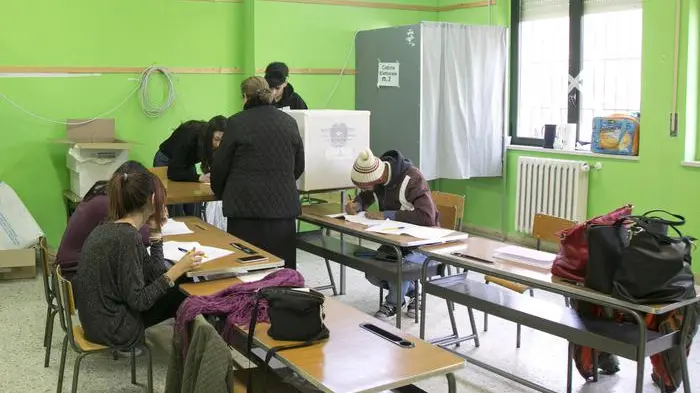
There are two elements with the greatest social impact: to begin with, the representative position of the chosen one; and then, continuing, but no less importantly, the turnout, or, to put it another way, the democratic participation of potential Sardinian voters, which, undeniably, with good likelihood, seems to have drastically reduced over the last decade. Therefore, it would be illusory for both contending coalitions to consider the emerging data, directly linked to the representative capacity of the candidate and/or the leading candidate and the approval rating capable of arousing, to be of little relevance. Even more so when, in terms of the programs to be pursued, it appears that both sides have not yet reached a certain definitive point. In short, what could well be considered a real participatory crisis, and which had already become evident in the recent past, has amplified over the next few years, becoming, in the regional perimeter of reference, the only real tip of the balance in the most broad context of electoral competition.
In essence, and all things considered, the center-right and the center-left are opposed, in equal measure and equidistance, by the so-called "party of abstention". It could be observed that the circumstance can well characterize Italian politics as a whole, both of a regional and national nature, and, rather, expresses and reflects a crisis that is difficult to overcome given and considered also the critical economic-social data that appear in all their evidence in Sardinia such as, for example, in general terms, by way of example but not limited to, those attributable to the increase in youth unemployment, and/or to the difficulties of the island's tourism sector, also due to the problems related to the “expensive ferries” and the “expensive flights”. And again, the purely political fact represented by the participation in the electoral competition of all party movements should not be overlooked at any time, including those with lower approval percentages which, all things considered, and in percentage terms, can well make the difference by shifting the the balance tips towards one or the other of the two majority coalitions.