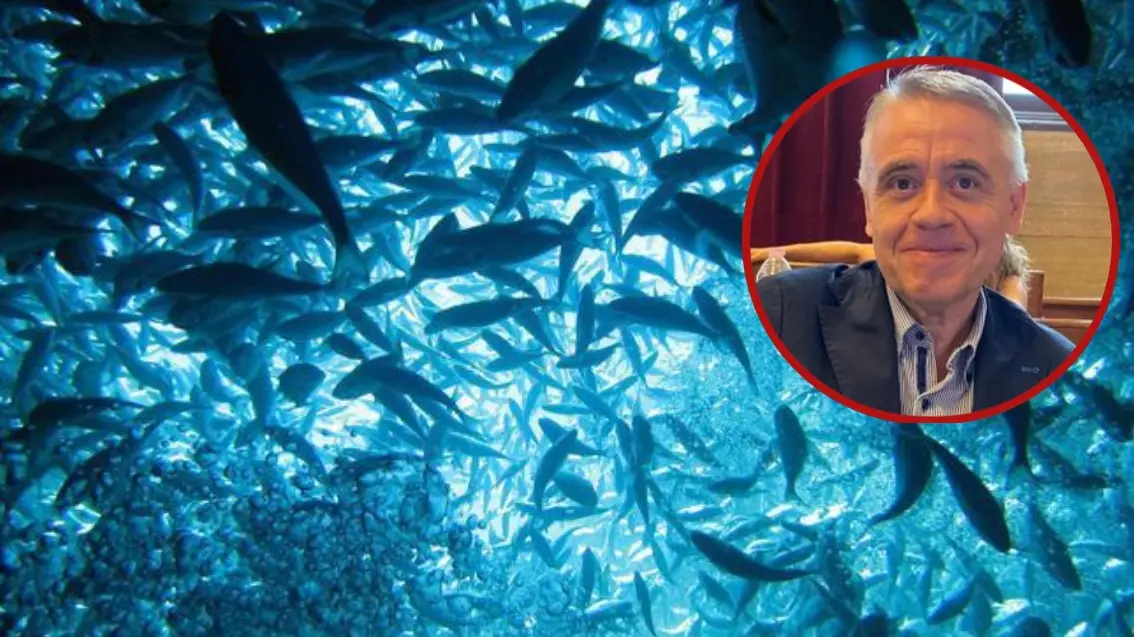


We receive a speech on the topic of aquaculture from Pierluigi Mannino , city councilor in Cagliari, president of the Commission for the Evaluation of municipal policies and the quality of services. He was also president of the Productive Activities, Tourism and Territory Promotion commission.
************************************************** *****
«On the occasion of a recent trip to Norway, I had the opportunity to visit Eide Fjordbruk and meet the company top management. Eide Fjordbruk, better known in the markets as Eide, is an aquaculture company well known for its disruptive innovations and its commitment to sustainability. It is also the first salmon farmer in the world to achieve carbon neutrality certification. Among the products created by Eide there is also the famous Salmon Zero, the first salmon certified with zero emissions".
«But the Norwegian company, as was explained to me, does not limit itself to producing salmon and believes that it is its precise duty to inform consumers and society about what it really means, beyond stereotypes and clichés, to do aquaculture in 2023. To achieve this goal he created the Salmon Eye, a gigantic and hyper-technological floating sculpture in the shape of a salmon eye, designed by the famous Danish studio Kvorning Design, and positioned in the heart of the Hardanger fjord, the most picturesque of the Norwegian fjords ».
«The Salmon Eye, which immediately became an icon of the Norwegian landscape and already viral on all social media, hosts an information center open to all and can be visited with guided tours. Inside, multimedia contents accompany the guest on a journey through the challenges and potential of a sector at the center of often instrumental and unmotivated criticism. To guarantee neutrality and objectivity of the information, the center has an independent scientific committee including some of the most authoritative voices from academia and Norwegian society, including well-known environmentalists.
The visit to the Salmon Eye, beyond the architectural excellence of the structure, which is truly remarkable, was a truly interesting and instructive experience. These are some of the things that the visitor learns during the tour and when he stays to chat with the very kind guides: only 2% of the calories consumed on the planet come from the sea; aquaculture has already surpassed fishing in terms of total production and is expected to cover 90% of global seafood needs by 2050; almost all wild fish stocks are heavily overexploited. For this reason, aquaculture will have to bear the burden alone of the increase in consumption resulting from global population growth; farmed salmon has been at the top of all sustainability rankings for years and is the farmed animal protein with by far the lowest carbon emissions, about a tenth compared to beef and even lower than those of the fished product. In the Coller FAIRR Protein Producer Index, a global reference ranking of the most sustainable protein producers, three Norwegian salmon producers occupy the top three places and salmon producers 8 of the top 13 positions; the “very high stocking densities”, often used as an argument by aquaculture detractors, cannot exceed 25 kg per cubic meter, i.e. 97.5% water and only 2.5% fish. A density so low, and I speak from personal experience, that it makes the tanks seem half-empty when fish swim near the bottom; in the history of Norwegian aquaculture, residues of antibiotics and drugs have never been found in the product intended for consumption and, compared to a total production of around 1.5 million tonnes (around 10 billion portions!), antibiotic prescriptions there are less than 50 a year."